
PP Rope Uses in Fishing & Marine Industry
The fishing and marine industry operates in some of the harshest environmental conditions, including constant exposure to water, salt, sunlight, and heavy mechanical loads. Choosing the right rope material is crucial for safety, durability, and operational efficiency. One of the most widely used materials today is PP rope, also known as polypropylene rope.
Thanks to its lightweight nature, high tensile strength, water resistance, and affordability, PP rope has become an essential component in fishing and marine applications worldwide. In this blog, we will explore the PP rope uses in fishing & marine industry, its advantages, and why it is the preferred choice for marine professionals.
What Is PP Rope?
PP rope is manufactured using polypropylene fibers, a synthetic thermoplastic polymer known for its durability and versatility. These ropes are commonly used across industries such as marine, fishing, agriculture, construction, and packaging.
One of the standout features of PP rope is its ability to float on water, which makes it extremely useful in marine environments where visibility and safety are critical.
Importance of PP Rope in Fishing Industry
The fishing industry relies heavily on ropes for daily operations. From handling fishing nets to securing boats, ropes must perform consistently in wet and salty conditions.
Common PP Rope Uses in Fishing Industry:
- Fishing nets and net lines
- Longline and trawling operations
- Fish cages and traps
- Buoys and float lines
- Securing fishing boats at docks
PP rope does not absorb water, which helps maintain its strength and reduces the physical strain on fishermen. Its lightweight nature also makes handling and storage easier on fishing vessels.
PP Rope Uses in Marine Industry
In the marine industry, ropes are used for mooring, anchoring, towing, and load handling. PP rope is widely preferred due to its resistance to harsh marine conditions.
Key Marine Applications of PP Rope:
- Boat mooring and anchoring lines
- Dock and port operations
- Towing and hauling activities
- Safety lines and lifelines
- Cargo securing on ships
Because polypropylene rope resists saltwater corrosion and chemicals, it performs well even after prolonged exposure to marine environments.
Advantages of PP Rope for Marine & Fishing Applications
- Lightweight & Floating
PP rope floats on water, making it easy to locate and reducing the risk of entanglement.
- Water & Chemical Resistance
It does not absorb moisture and resists saltwater, oils, and chemicals.
- High Tensile Strength
Despite being lightweight, PP rope offers excellent strength suitable for heavy-duty tasks.
- UV Resistance
PP rope can withstand prolonged exposure to sunlight, making it suitable for outdoor marine use.
- Cost-Effective
Compared to nylon and polyester ropes, PP rope is more affordable while delivering reliable performance.
Why Marine-Grade PP Rope Is Preferred
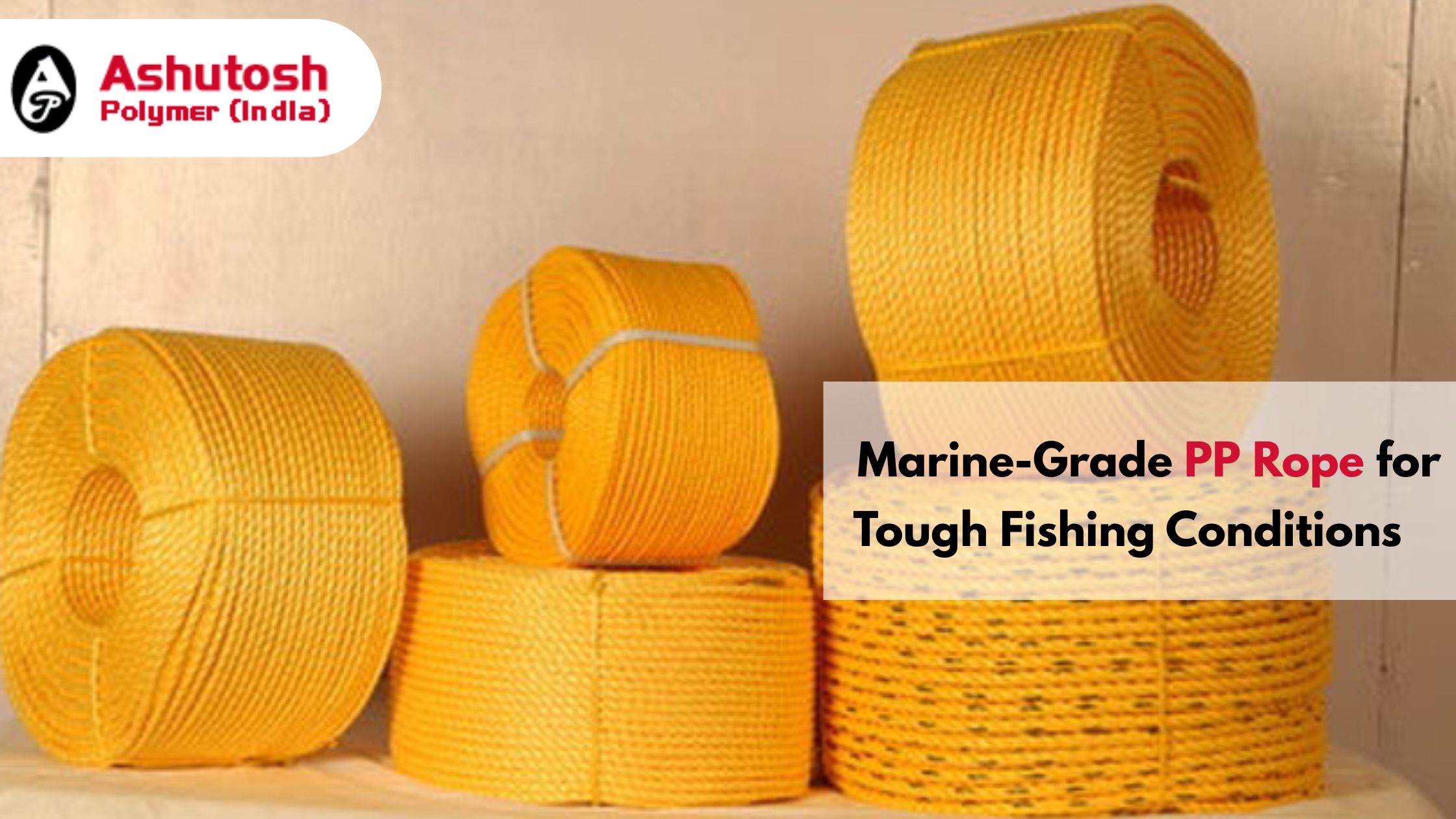
Marine-grade PP rope is specially designed for demanding marine applications. It offers enhanced durability, better abrasion resistance, and consistent performance under stress.
Using marine-grade PP rope ensures:
- Improved operational safety
- Longer service life
- Reduced maintenance costs
- Reliable performance in harsh conditions
This makes it an ideal solution for fishing boats, ports, shipping companies, and marine operators.
Comparison of PP Rope with Other Marine Ropes
When compared to nylon or polyester ropes, PP rope stands out due to its floating ability and chemical resistance. While nylon offers higher elasticity, PP rope is preferred where water resistance and lightweight handling are more important.
This balance of performance and cost makes PP rope a popular choice in fishing and marine industries.
How to Choose the Right PP Rope for Marine Use
When selecting PP rope for fishing or marine applications, consider:
- Rope diameter based on load requirements
- Twisted or braided rope construction
- UV and abrasion resistance
- Marine-grade certification
- Intended application (nets, mooring, towing)
Choosing the right specification ensures safety and long-term durability.
Conclusion
The PP rope uses in fishing & marine industry clearly demonstrate why polypropylene rope is a trusted material in demanding marine environments. Its floating ability, water resistance, strength, and cost-effectiveness make it an excellent choice for fishing operations, boat mooring, and marine logistics.
By choosing high-quality marine-grade PP rope from a reliable manufacturer, businesses can ensure safety, efficiency, and long-term performance in fishing and marine applications.
Looking for high-quality marine-grade PP rope for fishing or marine use?
Contact Ashutosh Polymer today for durable polypropylene ropes available in multiple sizes at competitive prices.
Frequently Asked Questions (FAQs)
1. Why is PP rope used in the fishing industry?
PP rope is lightweight, floats on water, resists saltwater, and offers excellent strength, making it ideal for fishing operations.
2. Does PP rope absorb water?
No, PP rope does not absorb water, which helps maintain its strength and performance.
3. Is PP rope suitable for saltwater environments?
Yes, PP rope is highly resistant to saltwater and chemicals, making it suitable for marine use.
4. Can PP rope be used for boat mooring?
Yes, marine-grade PP rope is commonly used for boat mooring and anchoring.
5. How long does PP rope last in marine conditions?
With proper use, PP rope can last several years due to its durability and UV resistance.